Making Cleo's Referrals Profitable Again
Cleo's referral share rate had been flat for several quarters, and the programme was losing money. I lifted share rate by 7%, then gated referral boosts behind a first repaid advance. Losses on referral boosts fell 92%, and the programme turned a profit for the first time in two years.
Overview
Referrals are one of Cleo's cheapest ways to grow. I joined to get more people sharing, and did. But more shares didn't fix the bigger problem. Too many referral rewards were going to people who never paid them back, so the work moved from growing referrals to cleaning them up.
Impact
−92%
losses on referral boosts
+49%
net value of each referral
Profitable
referral boosts, for the first time in two years
+7%
share rate across 71,634 users
Context
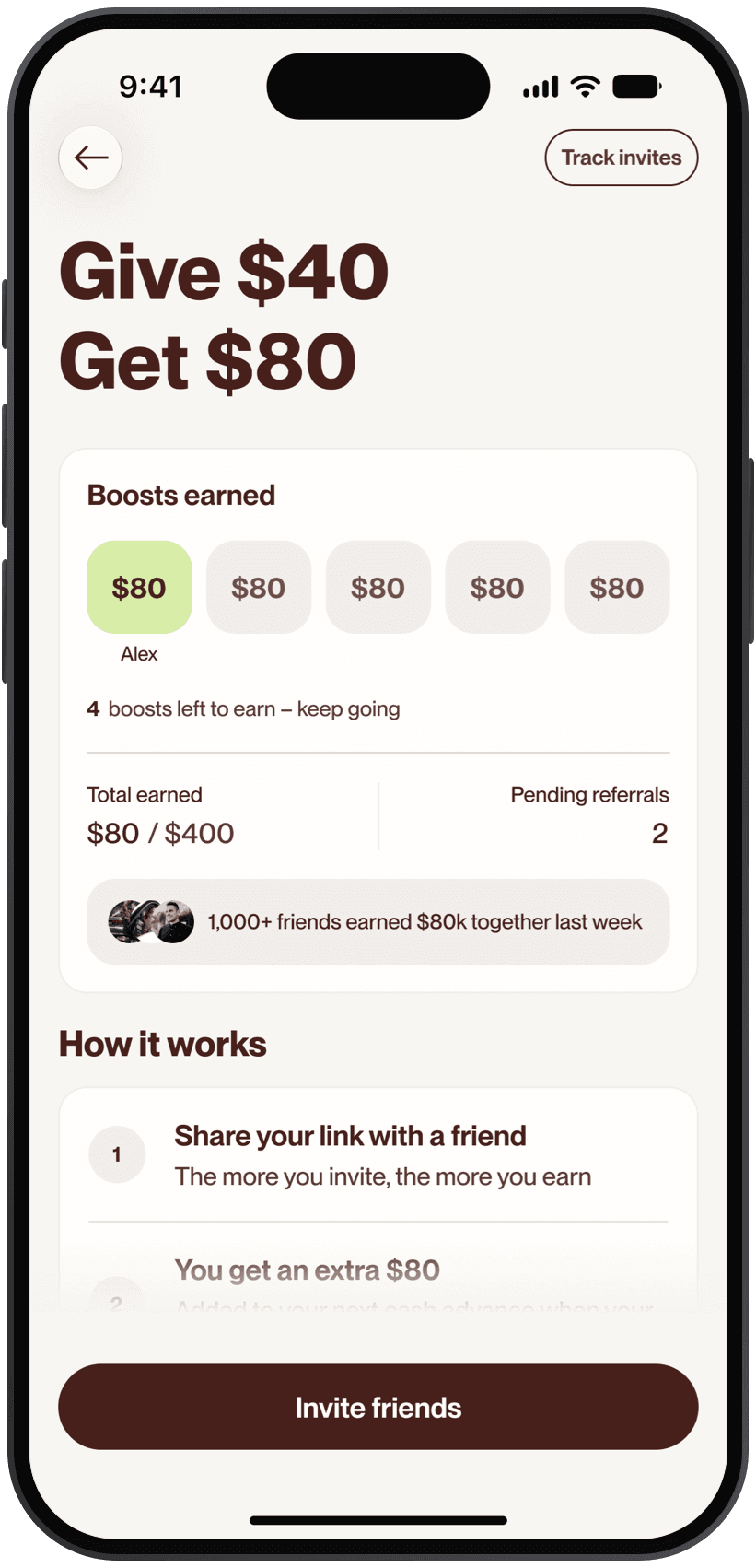
Invite a friend, they join, you both get a boost. The share rate on the referral screen had stopped moving for several quarters.
A boost is extra money added to a cash advance, Cleo's early access to your pay. I was brought in to find out why sharing had stalled. That became the first half of the project. The second half started when the data showed that more referrals weren't what the programme needed.
Part 1 · What stopped people sharing
It wasn't the size of the reward, and it wasn't trust in Cleo. People weren't sure the referral would work for their friend.
Mapped the hesitation
Workshops traced the exact moments people paused before sharing.
Read what people asked
Customer support conversations showed the questions people actually had, in their own words.
Remove the doubt
The brief changed from "improve the referral screen" to "remove the doubt that stops the share". The support questions became a new FAQ.
Two levers
Two changes, designed to be tested on their own and together. I leaned on gamification, hoping people who invited one friend would start inviting several.
Social proof
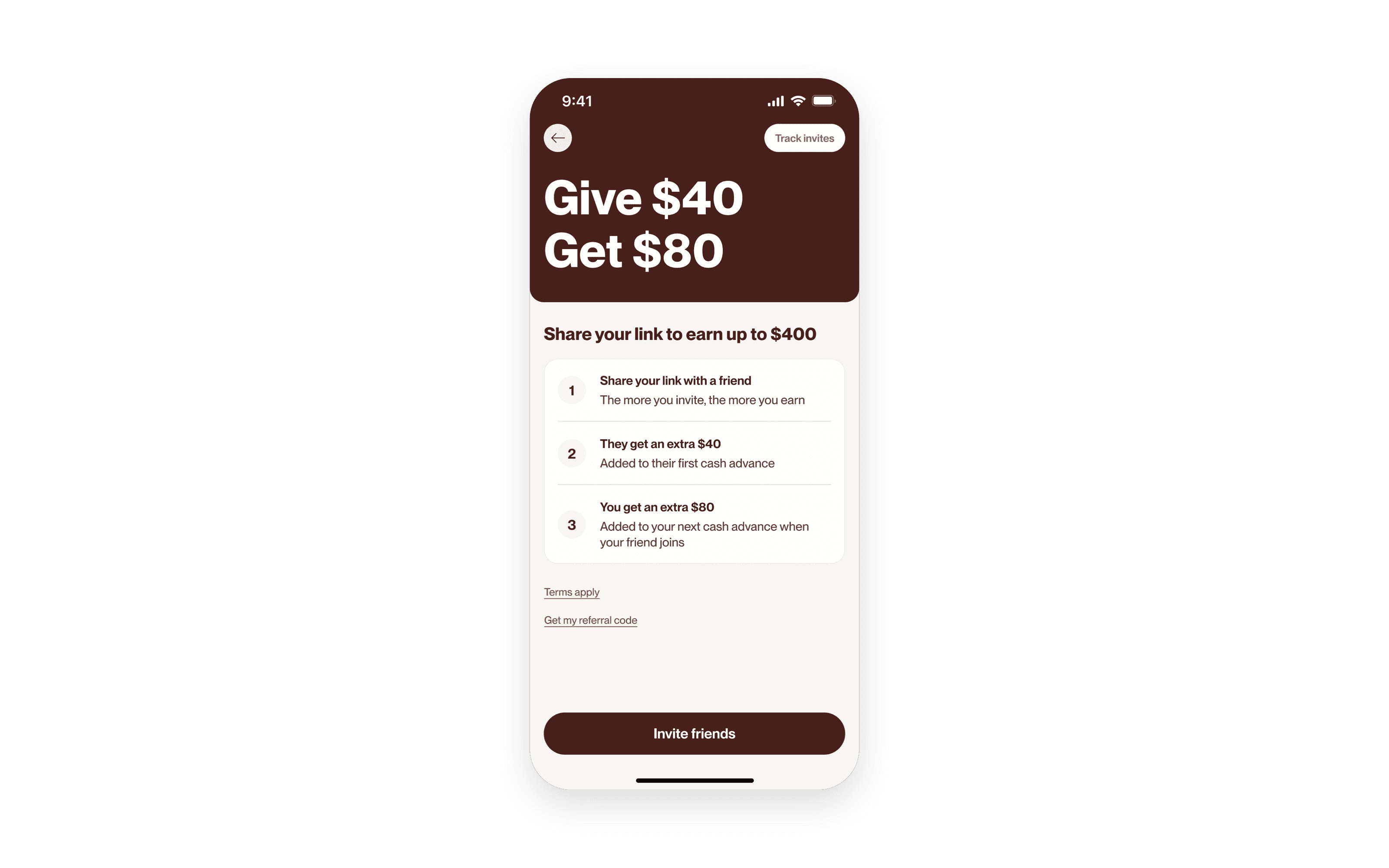
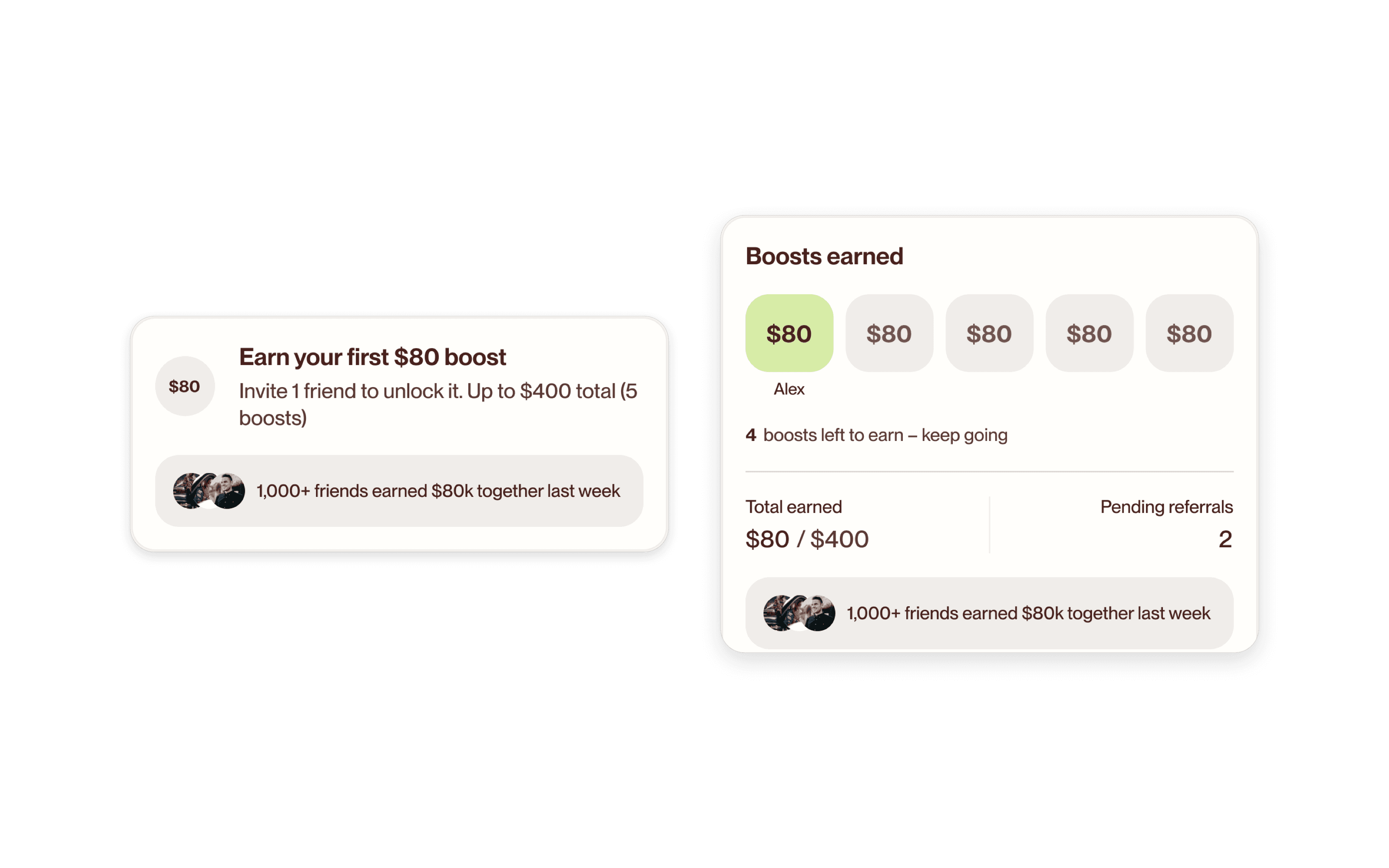
Real numbers from real referrals, shown at the moment someone decides whether to share. Evidence, not reassurance copy.
A boost tracker
The reward became something you fill up as friends join. The main button moved from a generic share prompt to tracking your invites.
The test
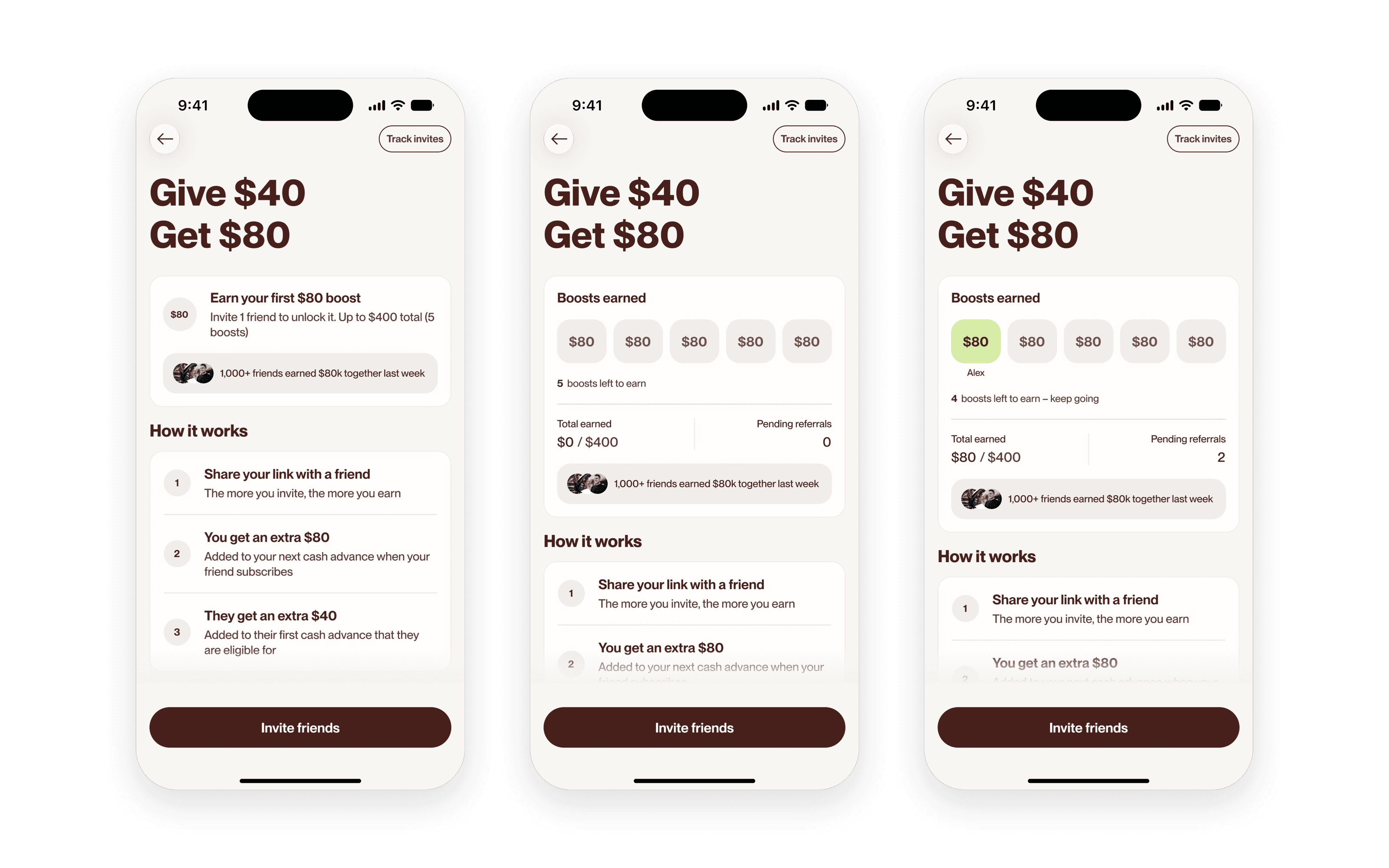
A three-way split, so we'd know which change was doing the work instead of shipping a bundle and guessing.
Control
The existing referral screen.
Social proof only
Proof points added at the moment of decision.
Both levers
Social proof plus the boost tracker. Share rate went up 7% across 71,634 users, and we rolled it out to everyone in February 2026.
Part 2 · More shares weren't the answer
Sharing went up. The programme still lost money.
Working with our data analyst, I set what each referral brought in against how often its boost was repaid. Some groups of referrers were bringing in negative value, and the fraud team had flagged that arrears on referral boosts were rising.
The problem was concentrated in brand-new users who hadn't yet taken out and repaid an advance. Most of the boosts they received were never paid back. Some were people signing up again and again with new details to collect the boost. Others were already stretched, inviting friends in the same position, and the boosts were stretching them further.
Getting more people to refer wouldn't help if the referrers were the wrong ones. We'd just be chasing our tail.
Our first fix was to stop showing referrals to new users. Views of the referral screen from that group fell 90%, but referrals were still reachable from other parts of the app, and boosts to new users didn't drop.
Cleaning up the funnel
01
Audit the app, not the Figma file
- Problem
- Hiding the main entry point hadn't worked, because referrals showed up in places nobody had mapped.
- Decision
- I audited every entry point and every mention of referrals in the live app, using Claude with our GitHub repo to search the codebase rather than trusting Figma as the source of truth.
- Outcome
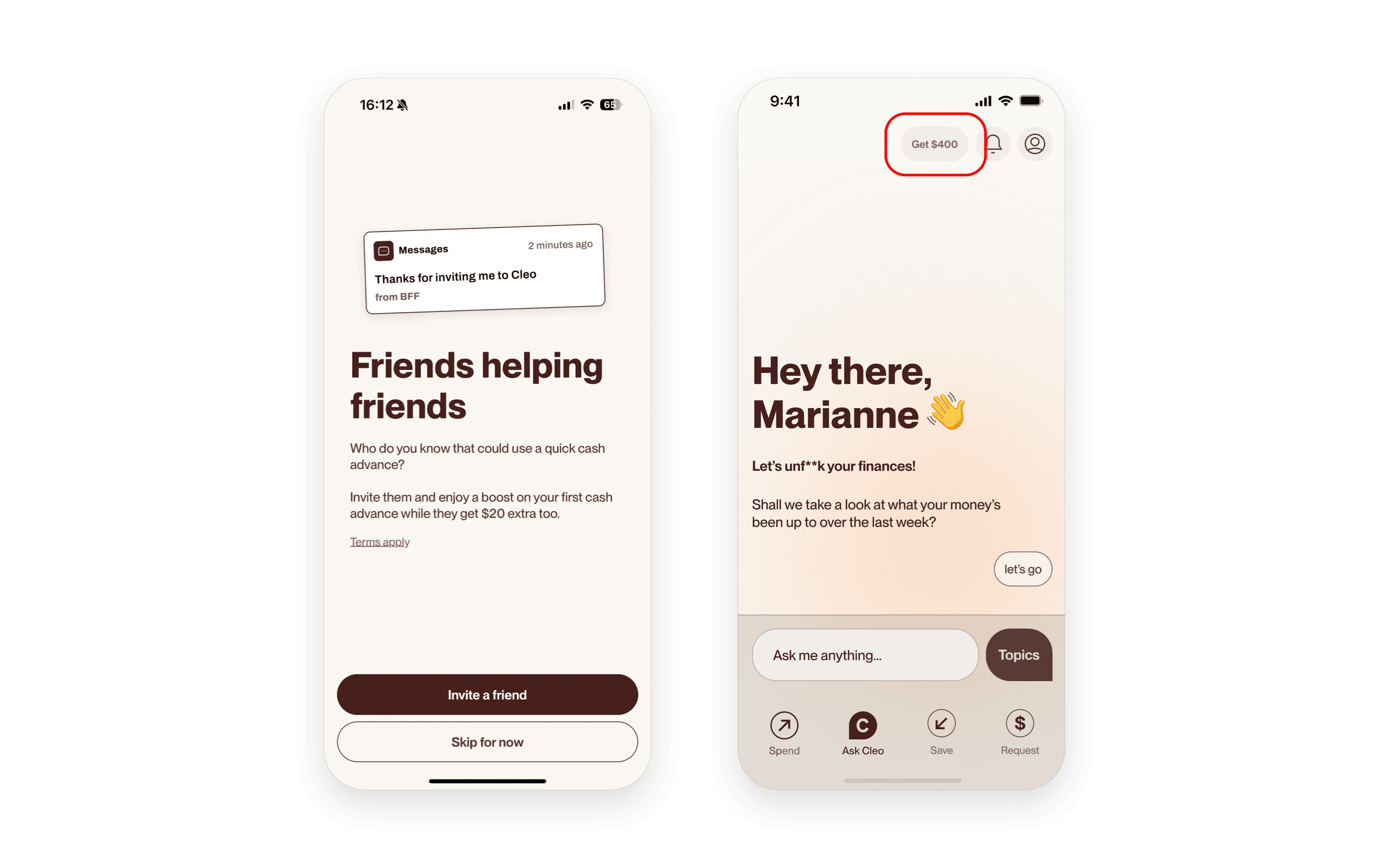
- A complete map of where referrals could be reached, so the gate could cover all of them. Entry points like the onboarding invite and the "Get $400" button on home were removed for new users.
02
Unlock referrals by repaying your first advance
- Problem
- Anyone could get a referral boost on day one, before showing they could repay an advance.
- Decision
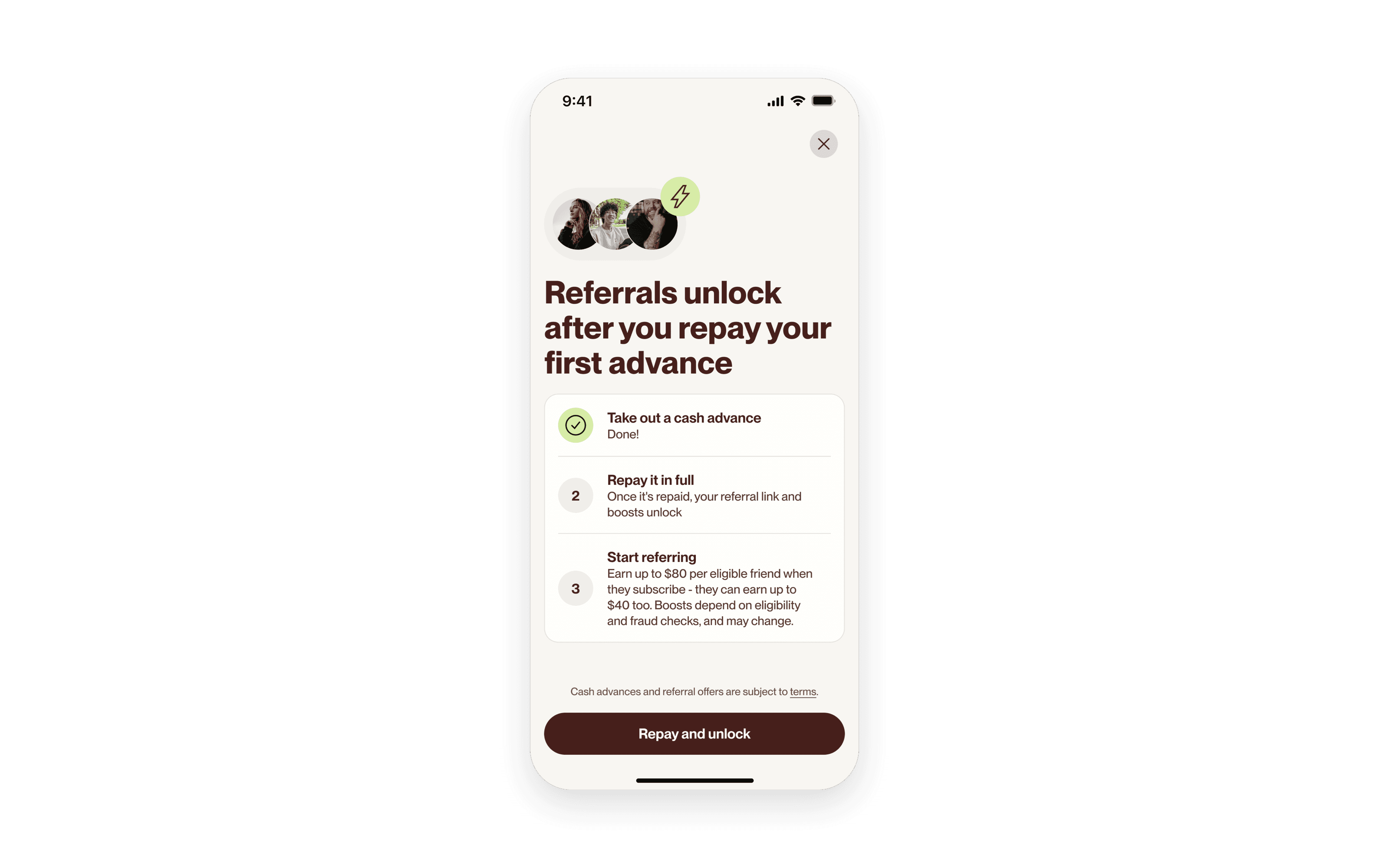
- Referral boosts now unlock once someone has taken out and repaid their first advance. If they reach referrals before that, a screen explains what they need to do to unlock it, instead of a dead end.
- Outcome
- Boost stacking went to zero, and losses on referral boosts fell 92%.
03
Making the case for less growth
- Problem
- Gating meant asking the business to accept fewer referrals, and some teams weren't keen.
- Decision
- I set out what we'd gain in quality against what we'd lose in volume, and we launched the gate for new users first so the results could make the case.
- Outcome
- Once the numbers came in, we extended it to existing users in the highest-risk groups, then to everyone. Each referral is now worth 49% more, and referral boosts are profitable for the first time in two years.
Looking back
More shares only matter if they come from the right people.
In hindsight I'd push for the quality work before the growth work. But the arrears picture wasn't clear when we started, and growing referrals is what showed us where the leaks were. With a cleaner funnel, growth work on referrals now builds on people who are good for the programme and good for Cleo.